Mode 1: Organic community participation
Build relationships, contribute value, earn trust, and introduce the project naturally over time.
Telegram groups are one of the few channels where discovery-minded audiences actually want to see new projects. This guide shows how to turn that reality into a scalable strategy, and why the plan fails unless the execution layer is just as structured as the messaging layer.
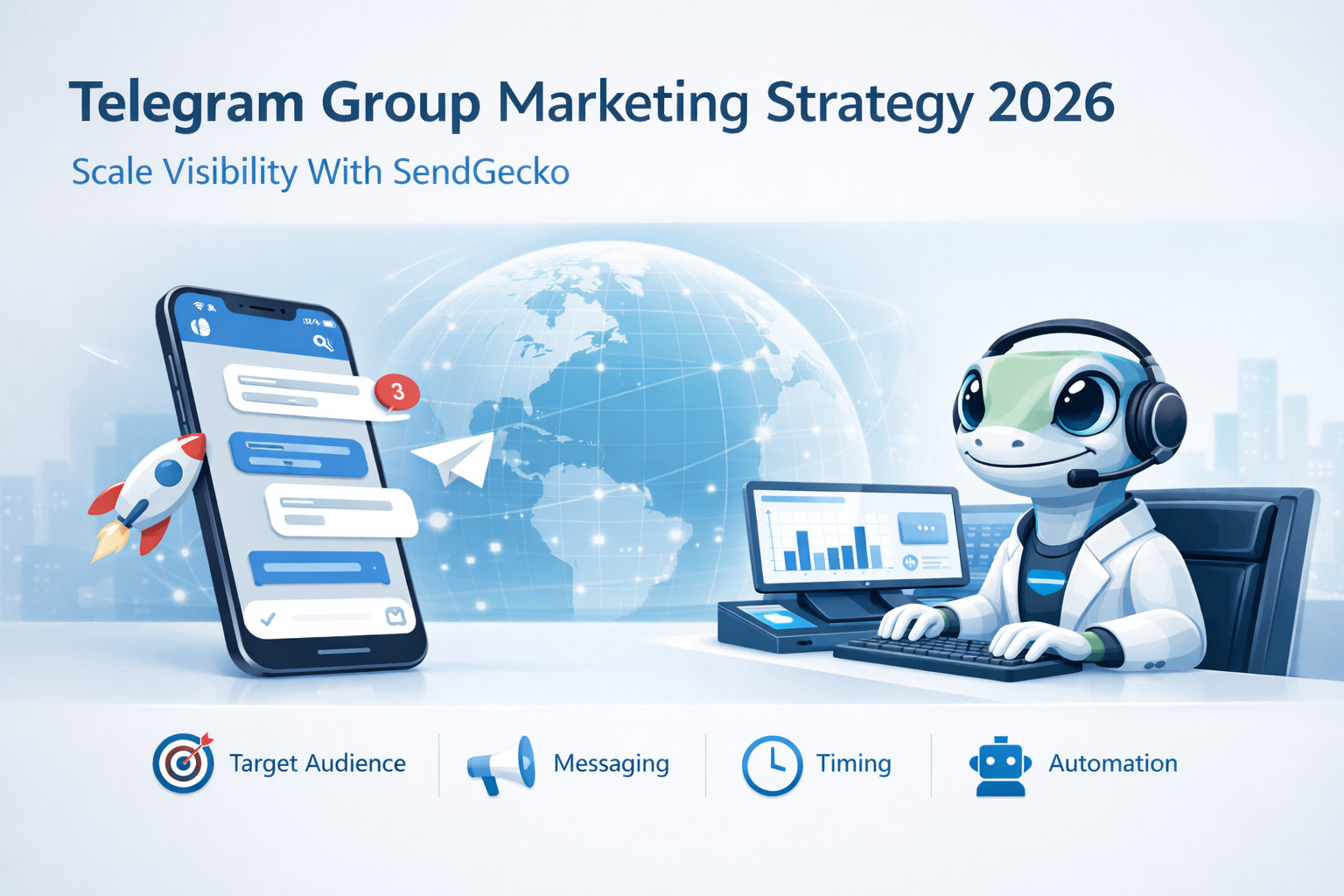
This guide moves from channel fundamentals into the workflow layer that makes scale possible.
Most marketing channels begin with friction. People are scrolling feeds, filtering inboxes, or skipping anything that feels like an ad. Telegram groups invert that relationship in the communities that matter for discovery. Members join because they want to surface projects, products, tokens, and opportunities.
That makes Telegram group marketing unusually powerful. In the right groups, the message is not fighting against the purpose of the environment. It is operating inside the exact context where discovery is expected. That is a better starting point than almost any interruptive channel.
The hard part is not proving that Telegram groups matter. The hard part is operating across enough of them, with enough consistency, without turning the campaign into account burnout or all-day manual labor. That is where strategy and infrastructure have to meet.
Build relationships, contribute value, earn trust, and introduce the project naturally over time.
Post across a large set of relevant groups systematically to generate broad and repeatable visibility.
The strongest campaigns use both. Organic participation creates legitimacy and deeper trust inside communities where relationship quality matters. Promotional broadcasting creates the reach required to be seen at all. One builds depth; the other builds scale.
SendGecko is built for the second mode. It handles the distribution layer that would otherwise consume an operator’s entire time. But it performs best when the project also has the community infrastructure to receive the attention it generates.
The campaign only works if the group list is relevant, maintained, and segmented intelligently.
Clear value proposition, one strong call to action, and enough variation to avoid repetition fatigue.
The same message performs differently depending on posting windows, interval control, and market activity.
A strategy is limited by the health, depth, and discipline of the account pool running it.
Without an execution system, the other four layers remain theoretical once campaign volume grows.
Those first four components are strategy. The fifth is the operational layer that makes the strategy durable. This is why so many teams design a smart campaign and still fail to execute it consistently: they plan strategically but operate manually.
Targeting is the discipline of deciding which groups deserve a posting slot and which do not. A campaign built on a weak list wastes every other advantage. A campaign built on a curated list makes every message stronger before it is even published.
Tier 1: Core shilling groups. These are the backbone of most broadcast campaigns. They exist for promotional discovery and should take the majority of the posting load.
Tier 2: Niche-relevant communities. These groups are narrower, more selective, and often more valuable per post because the audience fit is tighter.
Tier 3: High-visibility general communities. These can be useful for reach, even if the individual conversion rate per post is lower.
Within every tier, group quality still matters more than raw member count. Evaluate activity, moderation, posting rules, relevance fit, and whether the audience behavior looks real. A list that grows without being curated eventually drags the campaign down.
A Telegram group marketing strategy lives or dies on message quality because the distribution layer only multiplies whatever the message already is. If the message is weak, broader reach simply spreads the weakness faster.
The message needs clarity first. In busy groups, readers decide in seconds whether the content is worth any attention. That means the project name, what it is, and why it matters should land immediately.
The call to action must stay singular. One message should point the reader toward one clear next step. Multiple competing asks weaken conversion because attention is already scarce.
Social proof, when real, changes how the message feels. Numbers, milestones, and verifiable progress are more persuasive than generic claims. And variation is non-negotiable. Repeating one paragraph across a huge group list is not a strategy; it is a detection pattern.
This is why AI message variation matters so much in the real workflow. SendGecko’s template system lets the operator feed one core message into a larger variation library so every post stays aligned without looking mechanically repeated.
Timing has two layers. The first is macro timing: which parts of the day the campaign should concentrate on if it wants to catch the highest overlap of active communities. The second is micro timing: how much space there is between posts, between accounts, and between repeat appearances in the same group.
For broad crypto and global community activity, three windows repeatedly matter most: the European afternoon plus US morning overlap, the US evening window, and the Asia-Pacific late-night/early-morning block. Covering all three gives the campaign global reach rather than timezone-limited reach.
Inside those windows, interval discipline becomes the real sustainability control. Per-account pacing has to stay human-looking, and the same group cannot be hammered repeatedly from different accounts in short succession. These are not optional safeguards. They are the timing rules that turn a burst into a system.
A manual operator eventually loses track of this logic under pressure. A scheduled workflow does not. That is why the timing framework matters as much as the message itself.
Your account pool is not just a technical prerequisite. It is the infrastructure layer that determines how aggressive, how stable, and how resilient the campaign can actually be.
Account quality matters more than raw account count. A smaller pool of warmed accounts with distinct operating patterns will outperform a much larger pool of weak or newly created accounts. Warmup is not optional. Accounts need time to build history before they can carry real campaign volume sustainably.
Separation matters too. Accounts should not behave as if one operator is driving them all identically. Campaigns need distinct pacing, controlled assignments, and enough redundancy that a single restriction does not damage the overall output.
The best way to think about accounts is as long-term assets. The more disciplined the management model, the more those accounts gain value over time.
This is the repeating pattern in Telegram marketing: the targeting is smart, the message framework is good, the timing logic makes sense, and the operator still fails. Not because the strategy was wrong. Because the human effort required to execute it manually is too high to sustain.
The first days usually look strong. Then coverage slips. Message variation gets lazier. Group audits stop happening. Account pacing becomes rushed. Someone misses a key window. A strategy that looked excellent on paper degrades into inconsistent output because the infrastructure to execute it was never there.
That is the execution gap. It is where good strategy collapses under manual operational pressure.
Campaigns keep running on schedule even when the operator is not at the keyboard.
AI-generated message variation removes the gradual quality drop that manual repetition creates.
Scheduler guardrails keep intervals and repeat-group timing from drifting into unsafe patterns.
Centralized group management turns list maintenance into a controlled workflow instead of spreadsheet sprawl.
Unified account visibility makes restrictions, pacing problems, and allocation issues easier to catch early.
SendGecko matters because it converts a strategy into a repeatable operating system. It removes the gap between planning and execution by handling the distribution work in the same environment where the accounts, templates, schedules, and group lists already live.
Community growth rate: How quickly the owned Telegram community grows as campaigns run.
Click-through and traffic quality: Which groups and message variants actually move people to act.
Group engagement: Whether the posts trigger replies, reactions, or signs that the message is landing.
Account health: Whether the strategy remains sustainable over 30, 60, and 90 days.
Volume efficiency: How much meaningful coverage the campaign gets from the available account pool without degrading quality.
The right metrics keep the strategy honest. They show whether the campaign is just posting, or whether it is actually building visibility, traffic, and durable operational performance.
Short answers to the strategic questions teams ask before scaling Telegram group campaigns.
These pages cover the pieces that make a group marketing strategy work at scale.